If you’re building a website for your business, it’s easy to get caught up in the design.
Which colours should you use?
What should the homepage look like?
Do you need animations?
Should you have a video?
But before you think about how your website should look, there’s a more important question to answer:
What should a business website actually include?
For a service-based business, your website needs to do more than look professional. It needs to help potential clients understand what you do, decide whether you’re the right fit, trust your business, and know what to do next.
That’s what good service business website design should accomplish.
You don’t necessarily need a huge website with 20 pages. You need the right information, presented in a way that makes sense to the people you’re trying to reach.
Here are the essential elements to consider.
1. A Clear Homepage
Your homepage is often the first interaction someone has with your business.
Within a few seconds, a visitor should be able to understand:
- What you do
- Who you help
- What makes your business different
- What they can do next
This is especially important for a small business website, where you may not have the brand recognition that a larger company has.
Your headline doesn’t need to be clever if being clever makes your offer harder to understand.
For example:
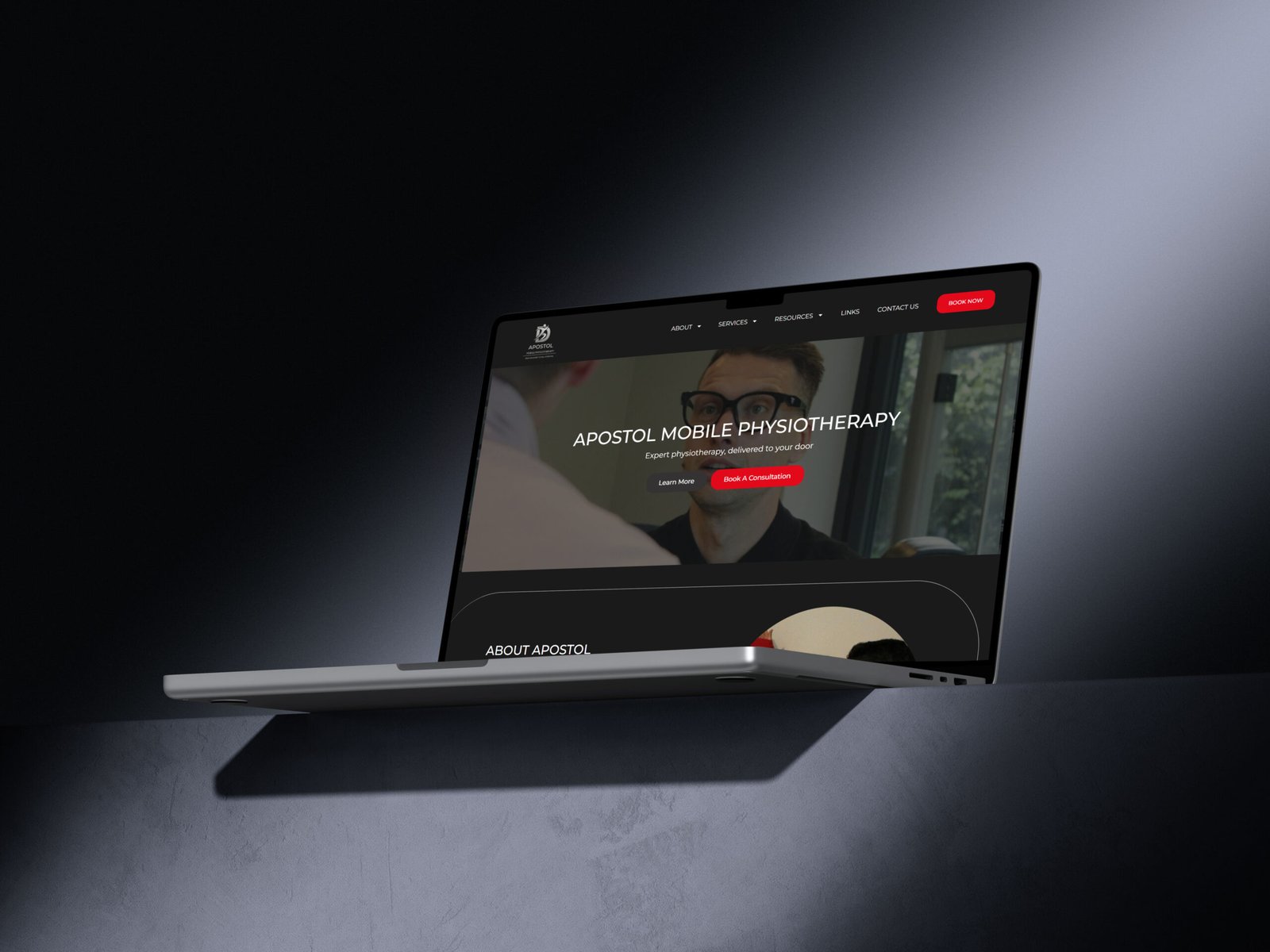
Mobile Physiotherapy That Comes to You
is much easier to understand than:
Helping You Move Better, Live Better
The second statement sounds nice, but it doesn’t tell the visitor what the business actually does.
Your homepage should give people enough context to decide whether they want to keep exploring.
2. A Clear Services Section
One of the biggest mistakes in website design for service businesses is making visitors work too hard to understand what’s being offered.
Your services should be easy to find and easy to understand.
Depending on your business, you might offer:
- Consulting
- Web design
- Physiotherapy
- Legal services
- Accounting
- Coaching
- Marketing
- Professional training
Each service should explain more than its name.
A potential client should be able to understand:
- What the service is
- Who it’s for
- What problem it solves
- What’s included
- What the process looks like
- How to get started
Remember, people aren’t necessarily looking for a list of deliverables.
They’re usually looking for a solution to a problem they already have.
3. Dedicated Service Pages
If you offer several important services, you may need more than one general Services page.
Individual service pages give you space to explain each offer properly.
They can also make your website easier to navigate and give search engines more context about what your business offers.
For example, a digital agency might have:
- Website Design
- Website Redesign
- SEO
- Business Automation
Instead of putting everything on one crowded page, each service can have its own dedicated page.
This is also where your service business website design can become more strategic.
The page isn’t simply describing what you do. It’s helping someone decide whether that particular service is right for them.
4. An About Page That Builds Trust
Your About page is another important part of a service business website because people are often buying from a person or team, not a product sitting on a shelf.
Your About page can include:
- Your background
- Your experience
- Your qualifications
- Your approach
- Your values
- Why you started the business
- A professional photograph
But your About page shouldn’t read like a CV.
Your potential client is ultimately trying to answer:
“Can I trust this person to help me?”
So tell your story, but connect it back to the person reading it.
Explain why your experience matters to them and what they can expect from working with you.
5. Proof That You Can Deliver
Trust is one of the biggest jobs your website has to do.
Before someone contacts you, they’re probably wondering:
“Has this business actually done this before?”
Give them evidence.
Depending on your business, this might include:
- Client testimonials
- Case studies
- Portfolio projects
- Reviews
- Client logos
- Certifications
- Before-and-after examples
- Results or outcomes
You don’t need dozens of testimonials.
A few specific and relevant examples can be much more useful than a long list of generic praise.
If you have worked with businesses similar to the people you want to attract, make those examples easy to find.
6. A Simple Explanation of Your Process
Another one of the business website essentials is showing potential clients what happens after they decide to work with you.
People are more comfortable taking action when they understand what happens next.
Your process might look something like this:
01 — Book a consultation
We learn about your business, goals and current challenges.
02 — Create the plan
We define the strategy, structure and scope of the project.
03 — Design and build
Your website is designed, developed and tested.
04 — Launch
Once everything has been reviewed and approved, your website goes live.
Your process doesn’t need to be complicated.
It just needs to remove some of the uncertainty around working with you.
7. Clear Calls to Action
Your website should never leave someone wondering:
“What am I supposed to do now?”
Every important page should give visitors a logical next step.
Depending on your business, that could be:
- Book a consultation
- Request a quote
- Schedule an appointment
- Get started
- Contact us
- Make an enquiry
- Download a resource
Your call to action should also make sense for where someone is in their journey.
A person visiting your website for the first time might want to Learn More before they’re ready to Book a Call.
Someone who has already read your services, testimonials and process may be ready to take that next step.
Good small business website design makes those next steps obvious without being pushy.
8. FAQs That Address Real Questions
If potential clients regularly ask the same questions before hiring you, your website should probably answer some of them.
FAQs might cover:
- Pricing
- Availability
- Service areas
- How long the process takes
- What happens after an enquiry
- Payment options
- Cancellation policies
- What clients need to prepare
You don’t necessarily need a giant FAQ page.
You can also place relevant questions directly on your service pages.
For example, a physiotherapy service page might answer questions about appointment length, location and what to expect during the first session.
This gives visitors useful information at the point where they’re already considering the service.
9. A Simple Way to Contact You
This sounds obvious, but your contact information should be easy to find.
Depending on your business, your website might include:
- A contact form
- Email address
- Phone number
- Booking system
- Physical address
- Business hours
- Service areas
And don’t forget mobile users.
A contact form that works beautifully on desktop but is frustrating to complete on a phone can create unnecessary friction.
Your website should make contacting you feel easy.
10. SEO and the Technical Foundations
A website can look beautiful and still struggle to attract visitors from search engines.
That’s why SEO should be considered part of your business website essentials, not something added as an afterthought.
Your website should have basic SEO foundations such as:
- Relevant keywords
- Descriptive page titles
- Meta descriptions
- Proper heading structure
- Descriptive URLs
- Image alt text
- Internal links
- Mobile responsiveness
- Good page speed
- An XML sitemap
- Google Search Console setup
For a local service business, you may also need to think about local SEO and location-specific pages.
The goal isn’t to fill every page with keywords.
It’s to make your website easy for both people and search engines to understand.
What Pages Does a Service Business Website Need?
There’s no universal sitemap that every business needs.
However, when someone asks about the pages every business website should have, a simple starting point is:
Essential pages
Home
Introduce your business and direct visitors to the right information.
Services
Explain what you offer and who it’s for.
About
Build familiarity and trust.
Contact
Give visitors an easy way to reach you.
Pages you may also need
Individual Service Pages
Useful when you offer multiple services or want to target specific search terms.
Case Studies / Portfolio
Show potential clients what you’ve done.
Testimonials
Provide social proof.
FAQ
Answer common questions and reduce uncertainty.
Blog / Resources
Educate your audience and create opportunities to attract relevant search traffic.
Booking Page
Useful if clients can schedule appointments or consultations directly.
Location / Service Area Pages
Useful for businesses serving specific towns, cities or regions.
The right structure depends on your business.
A small business website might only need five or six well-planned pages.
A larger service business may need a much more detailed structure.
The goal isn’t to have more pages.
It’s to have the right pages for your customers and your business.
Your Website Should Work as Part of Your Business
There’s one more thing worth considering when planning a service business website.
Your website doesn’t exist on its own.
Someone might:
Find you on Google → Visit your website → Submit an enquiry → Receive a response → Book a call → Become a client.
What happens between those steps?
If you’re manually checking your inbox, copying enquiries into a spreadsheet, sending the same confirmation email over and over, and remembering to follow up with every lead, there may be an opportunity to connect your website to your business processes.
For example:
Website form
↓
Lead captured
↓
Notification sent
↓
Lead added to CRM
↓
Confirmation email sent
↓
Booking link provided
↓
Follow-up
This is where a website can become more than a digital brochure.
It can become part of the system that helps your business operate.
And that’s an important consideration when you’re investing in a new website.
Don’t only ask:
“Will this website look good?”
Also ask:
“Will this website make it easier for my business to work?”
So, What Should a Service Business Website Include?
At the very least, your website should make these five things clear:
What do you do?
Who do you help?
Why should someone trust you?
What happens when they work with you?
What should they do next?
Everything else should support those questions.
You don’t need a complicated website just for the sake of having one.
You need a website that communicates your value clearly, helps the right people find you, gives them reasons to trust you, and makes taking the next step simple.
And as your business grows, your website can grow with it, connecting your marketing, lead capture, bookings and internal processes into a system that does more than simply sit online.
Need a Website That Does More Than Look Good?
At IfeCharis, I design websites and digital systems that help businesses communicate their value clearly, build trust and create a smoother path from visitor to enquiry.